By Julie Conroy & Ana Tavares Leary
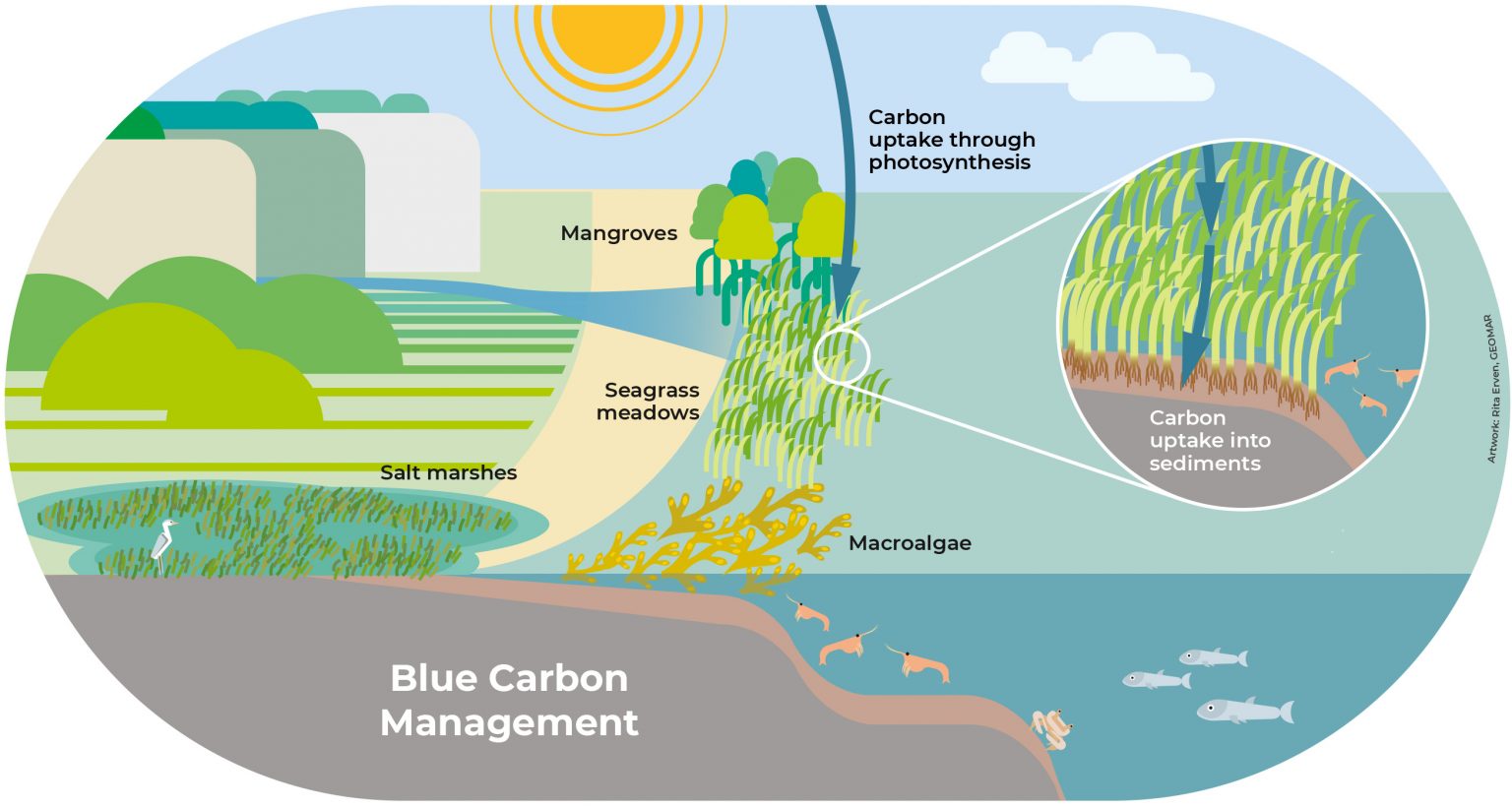
Carbon sequestration is the process of capturing carbon dioxide from the atmosphere, measured as a rate of carbon uptake per year. Carbon storage is the long-term confinement of carbon in plant materials and sediment, measured as a total weight of carbon stored.
Salt marshes have been found to be one of the most effective carbon sinks on the planet, able to sequester carbon up to 10 times faster than tropical rainforests. This carbon storage is known as “blue carbon.” Globally, it is estimated that coastal ecosystems—salt marshes, mangroves, and seagrass meadows—are responsible for sequestering up to 1.4 billion tons of carbon per year. This is equivalent to the annual emissions of 553 million cars. Salt marshes can sequester about 1,940 pounds of carbon per acre per year. Belle Isle Marsh, therefore, sequesters approximately 350 tons of carbon per year, or the equivalent of emissions from 319,000 miles of air travel. (Click here to access the full article.)